Integrating pollution science, spatial evidence, and social safeguards for watershed management.
Project Overview
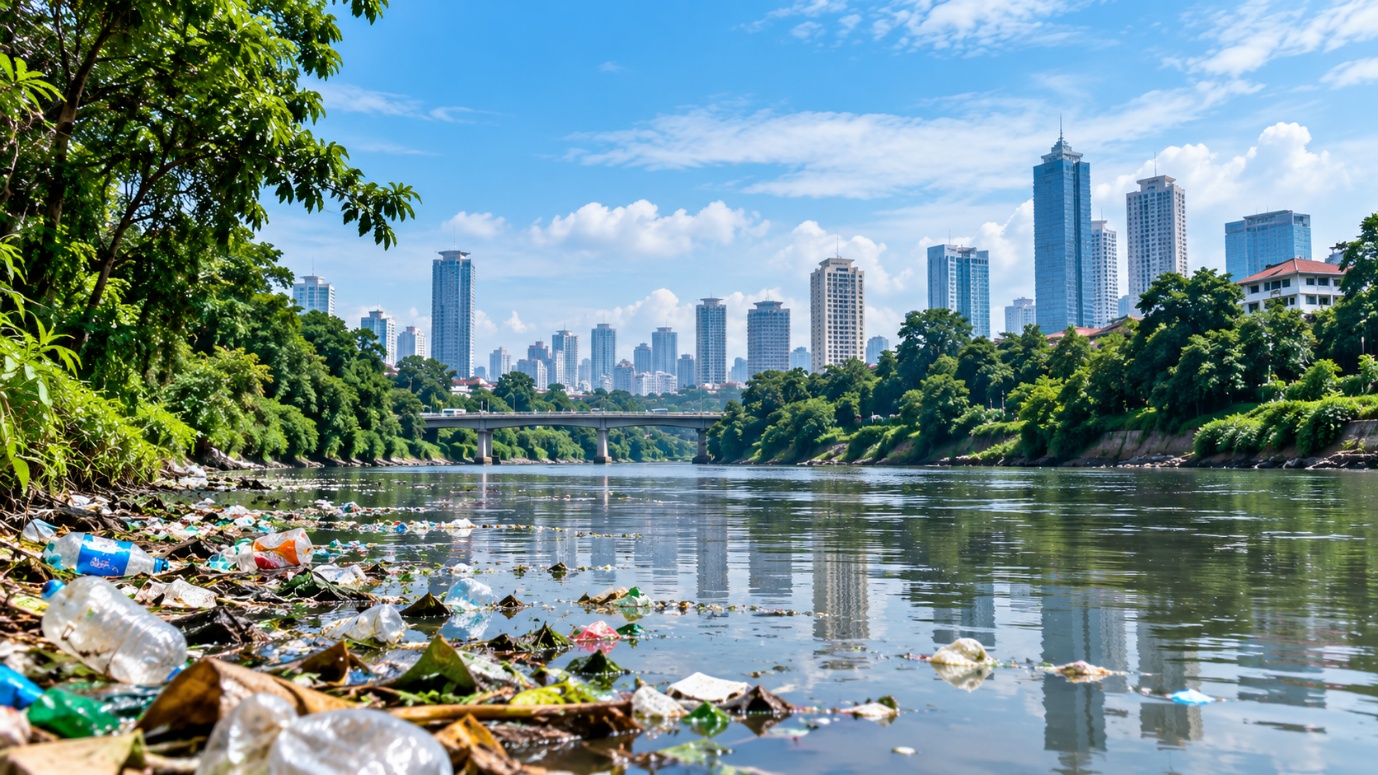
AVARI supported WWF Indonesia in developing an Environmental and Social Mitigation Framework (ESMF) for the Ciliwung Landscape, with a focus on microplastic pollution, water quality, pollution sources, and associated environmental and social risks. The assignment combined watershed-scale environmental research, spatial analysis, stakeholder engagement, and safeguard considerations to support more effective mitigation planning for plastic and microplastic pollution across upstream, midstream, and downstream areas of the Ciliwung River.
Our Approach
- Microplastic & Water Quality Assessment — designed and implemented sampling approaches for sediment, surface water, and groundwater, supported by laboratory analysis of microplastic characteristics and key water quality parameters.
- Pollution Source & Pathway Analysis — identified potential sources of microplastic pollution and analyzed their pathways across upstream, midstream, and downstream sections of the watershed.
- GIS-Based Pollution Mapping — developed spatial analyses and maps integrating microplastic concentrations, land use, population density, and known waste and pollution sources.
- Stakeholder & Social Safeguard Analysis — conducted stakeholder analysis, focus group discussions, and in-depth interviews, including engagement with informal waste workers and vulnerable groups, to understand social risks and project interactions.
- Polluter & Intervention Analysis — assessed contributions from industrial, domestic, commercial, and project-related activities, including potential microplastic generation associated with shredding and melting operations.
- Mitigation & Safeguard Framework Development — formulated evidence-based mitigation measures, monitoring mechanisms, effectiveness indicators, stakeholder engagement arrangements, grievance mechanisms, and safeguard considerations aligned with WWF requirements.
Project Outcome
The project delivered a comprehensive Environmental and Social Mitigation Framework supported by pollution mapping, stakeholder analysis, spatial evidence, and practical mitigation recommendations. The framework was designed to strengthen WWF Indonesia’s ability to manage environmental and social risks, guide pollution reduction interventions, and support more informed and inclusive decision-making within the Ciliwung Landscape.